
Golf practice guide
Build a golf practice plan that actually improves your game.
Good golf practice is not about hitting more balls. It is about knowing what to work on, giving each session a purpose, and measuring whether the work is making a difference.
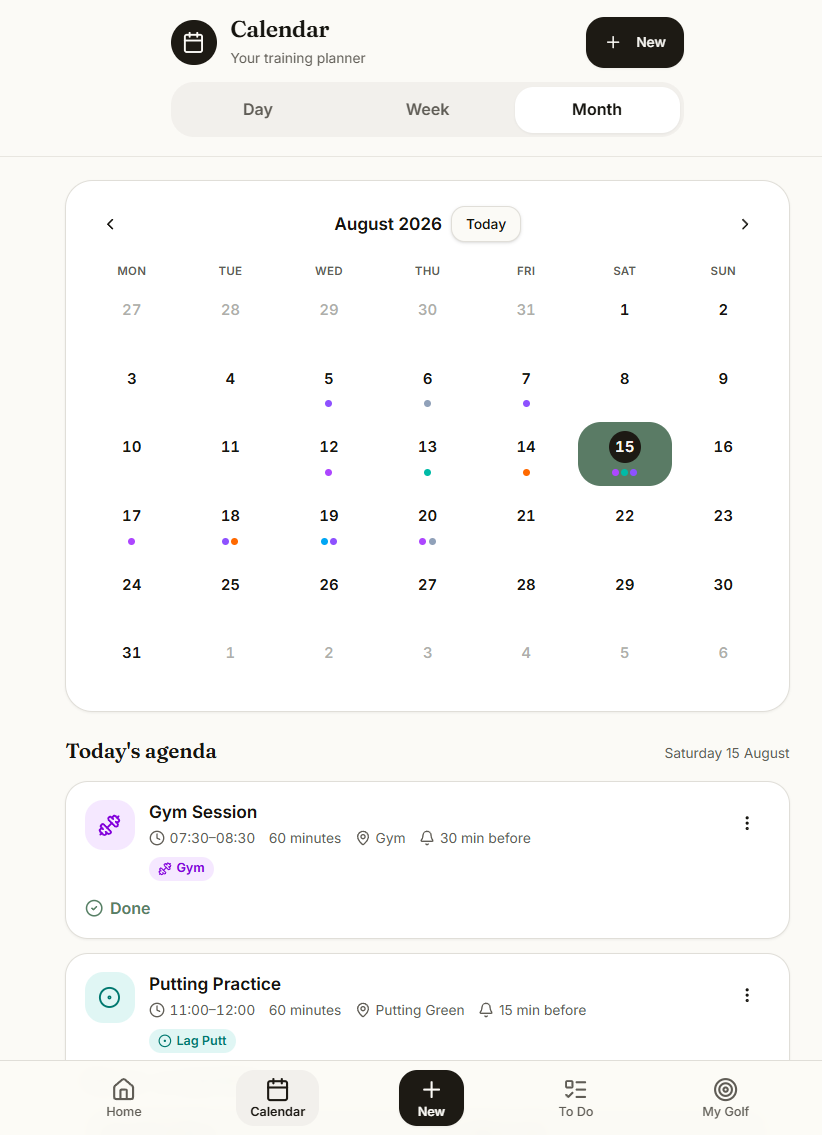
01
Start with the golfer, not the practice range.
A good golf practice plan starts before you hit the first ball.
Ask yourself what you are actually trying to improve. Is the goal to lower your scoring average? Become a better putter inside six feet? Improve distance control with wedges? Hit more greens? Gain speed?
The answer determines what deserves your practice time.
Before you plan your week
- Your main goal
- 2–3 areas that currently limit your performance
- How many hours you can realistically train each week
- Your next important tournament or competitive period
In Planscora, these priorities can become part of your season plan rather than disappearing into a notebook.
02
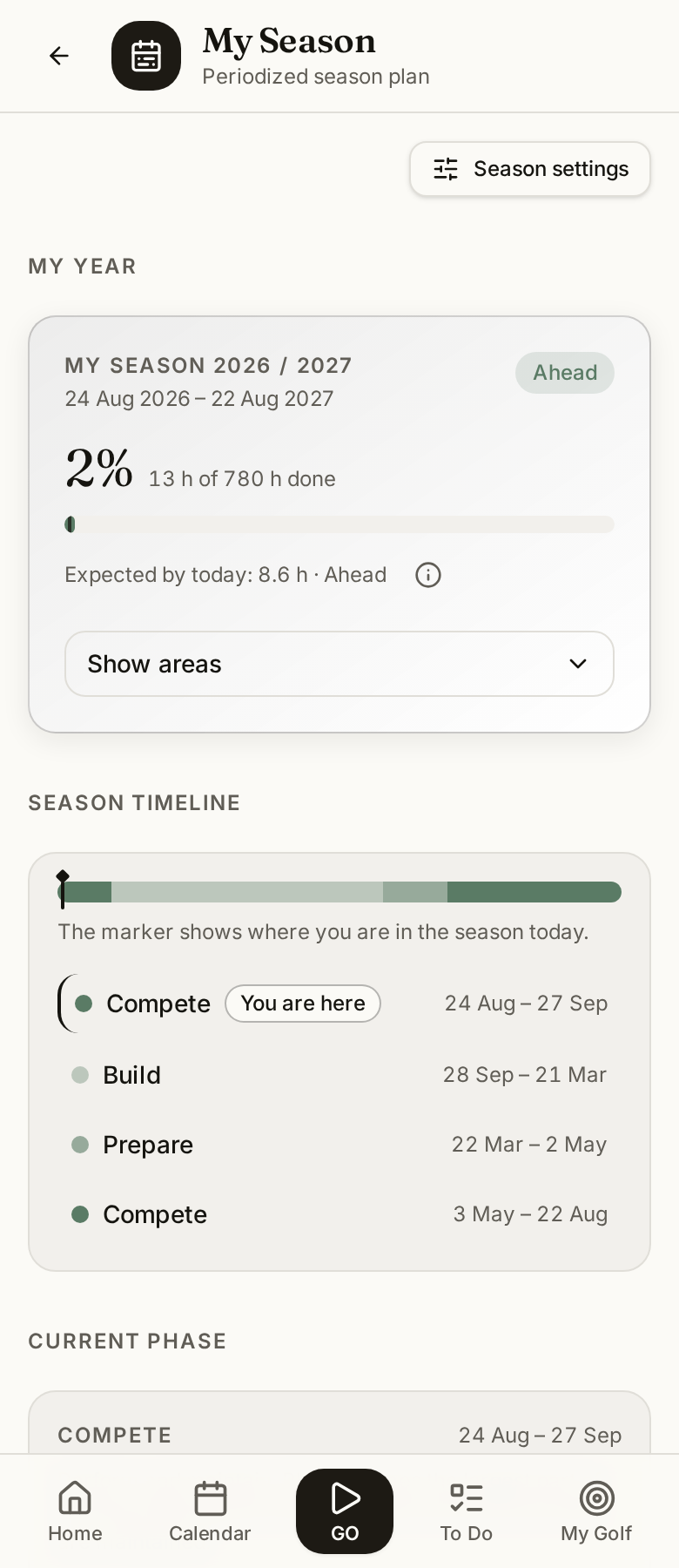
Plan backwards from competition.
Your practice should change with your season.
A development block can contain more technical work, physical training and speed development. As competition approaches, practice can become more specific, variable and performance-oriented.
- Build
- Prepare
- Compete
03
Build a week you can actually complete.
The best practice plan is not the one with the most sessions. It is the one you can consistently execute.
Example: A balanced golf training week
| Day | Time | Focus |
|---|---|---|
| Monday | 45 min | Putting |
| Tuesday | 60 min | Strength |
| Wednesday | 75 min | Range / ball striking |
| Thursday | — | Rest |
| Friday | 45 min | Short game |
| Saturday | 18 holes | Play / performance |
| Sunday | 45 min | Mobility + review |
This is only an example. A junior golfer, college player, competitive amateur and recreational golfer will have different constraints. The important part is that golf practice, physical training and playing all compete for the same available time.
04
Give every practice session a purpose.
Don’t schedule “Range — 60 minutes.”
Schedule what you are trying to accomplish.
Instead of
Range — 60 min
Try
- 10 min — Warm-up
- 20 min — Wedge distance control
- 20 min — Random approach practice
- 10 min — Pressure test
A session should answer three questions:
- What am I working on?
- How will I practice it?
- How will I know how I performed?
05
Balance technique, skill and performance.
- Technique
- Work on a movement or technical change. Feedback can be frequent and repetition can be relatively predictable.
- Skill
- Make the task more variable. Change clubs, distances, targets, trajectories or lies.
- Performance
- Create a score, consequence or benchmark. One ball. One attempt. Record the result.
All three can have a place in a golf practice plan. The balance changes depending on where you are in the season and what you are trying to improve.
06
Practice the whole game.
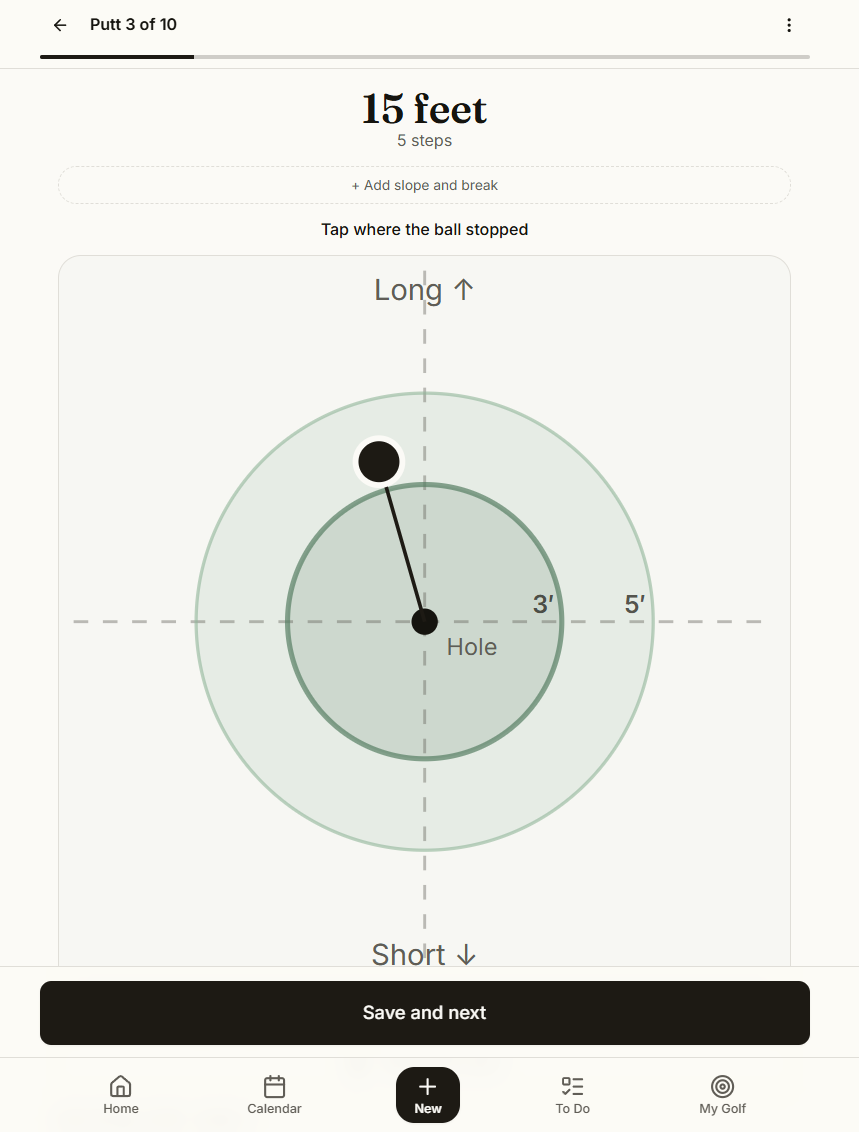
Putting
Start line, short putting, speed control and lag putting.
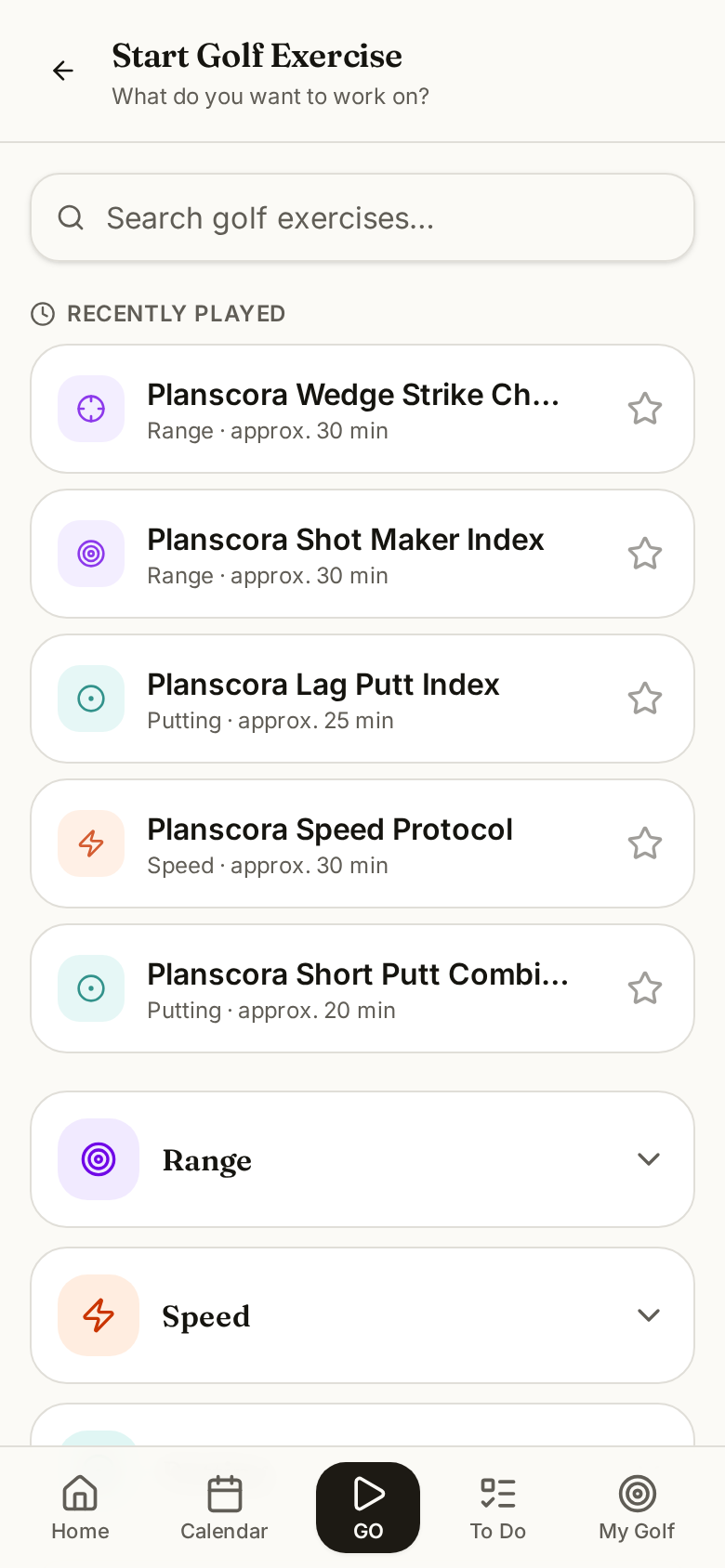
Short game
Different lies, distances, trajectories and targets rather than repeating one comfortable shot.
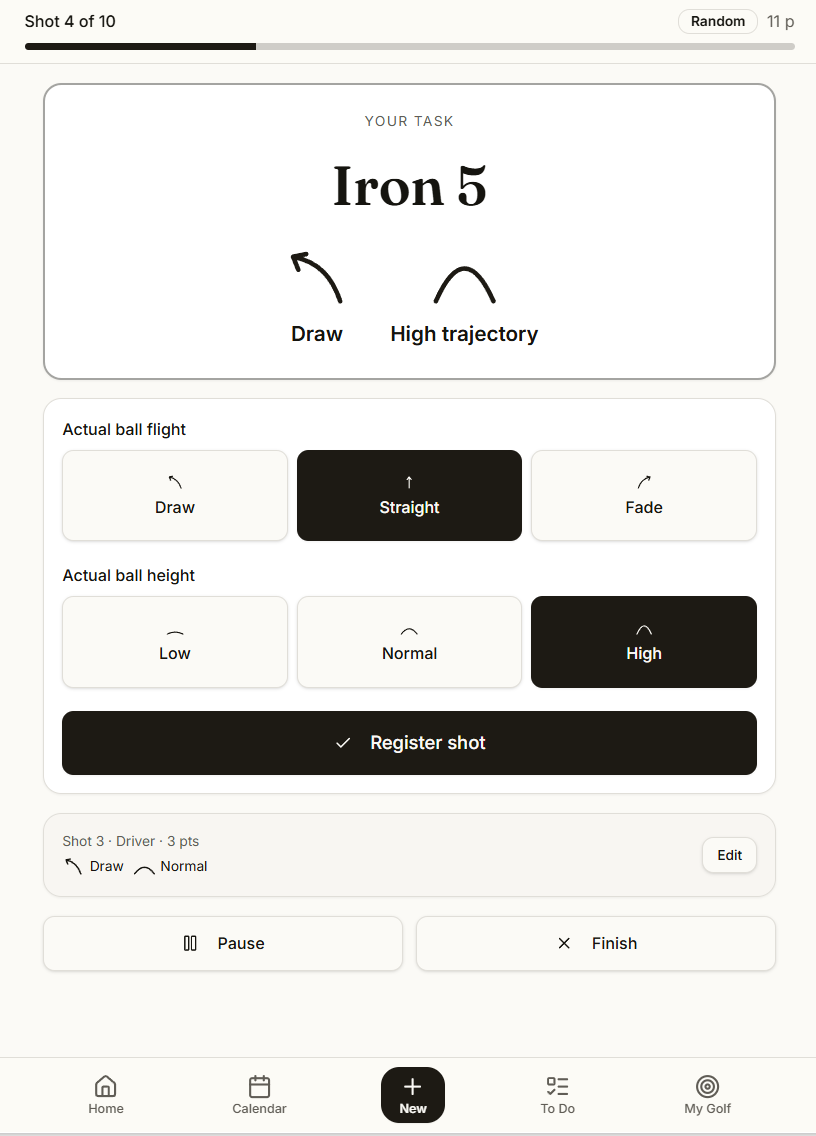
Ball striking
Club selection, trajectory, dispersion, distance control and random practice.
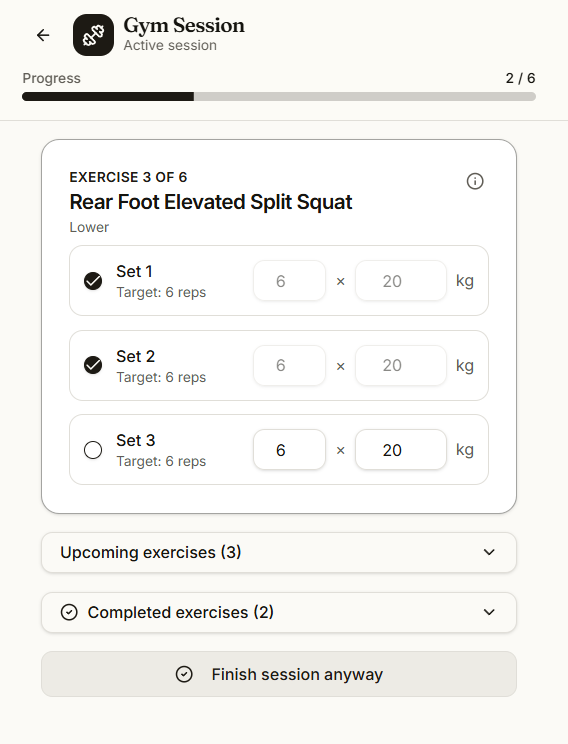
Speed & physical training
Strength, mobility, power and speed belong in the training plan too.
07
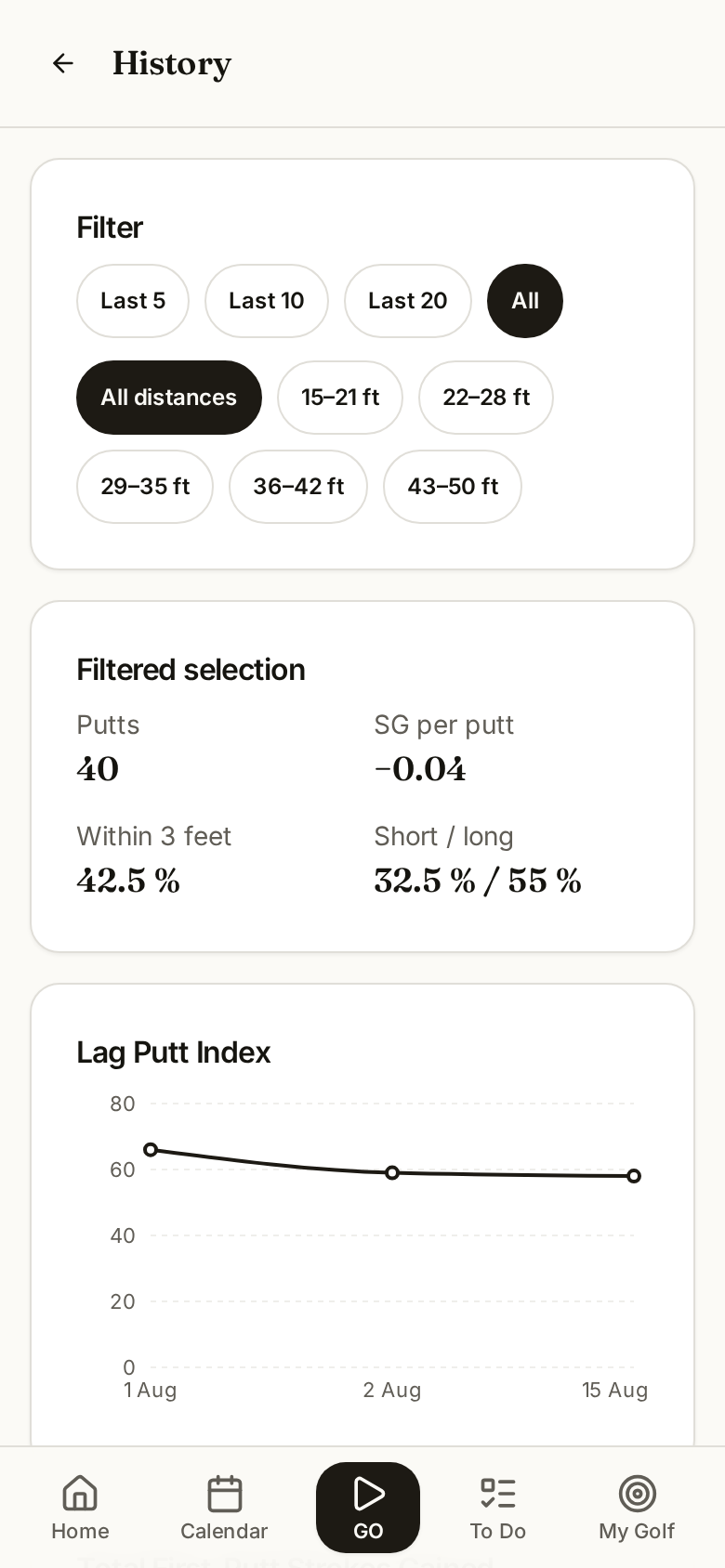
What gets recorded can be reviewed.
You do not need to measure every ball you hit.
But some part of your practice should leave evidence behind.
- Lag putting
- Average proximity / strokes gained
- Short putting
- Made / attempts
- Wedges
- Proximity and distance control
- Ball striking
- Score from a structured test
- Speed
- Clubhead speed
- Strength
- Sets, reps and load
A bad session can still be useful information. The goal is not to create perfect training data. It is to see whether your work is moving in the right direction.
08
Review the plan, not just the result.
At the end of each week, take five minutes and ask:
- What did I actually complete?
- What improved?
- What still needs work?
- Did my training reflect my priorities?
- What should change next week?
Plan → Practice → Progress. Each week feeds the next one.
Plan · Practice · Progress
Your practice should belong to a plan.
Planscora brings your season, calendar, golf practice, physical training and training history into one system — so today’s session is connected to what you are trying to achieve.
Want the full overview? See what Planscora does